
Can Chalk Teeth Be Treated in Children? Absolutely!
If you suspect that your child may have chalk teeth, have them examined by their pediatric dentist in Munich as early as possible. An accurate diagnosis is crucial for the right treatment. While chalk teeth cannot be fully healed, starting treatment early can significantly slow down further decay.
At Lachzahn Dental Practice, we place great importance on hygiene
What Are Chalk Teeth?
Molar-Incisor Hypomineralization (MIH) – the medical term for chalk teeth — is now considered a widespread condition in Germany. Almost one in three children is affected to varying degrees. In most cases, it is the permanent molars (back teeth) and incisors (front teeth) that are impacted by the hypomineralization.
But what does that actually mean? MIH is a developmental disorder of the teeth. During tooth formation, not enough minerals are incorporated into the enamel. As a result, the enamel is significantly thinner and softer than in healthy teeth and does not provide sufficient protection. The tooth surface becomes rough and porous, making it much more susceptible to cavities. Chalk teeth usually become noticeable when the permanent teeth start to erupt, but structural defects can also appear in the baby teeth.
How to Recognize Chalky Teeth?
Despite regular check-ups and proper preventive care, it still happens that parents come to our pediatric dental practice in Munich and report their children experiencing pain while brushing their teeth.
Often, the teeth are very sensitive to hot and cold foods, but sweets and acidic foods can also cause discomfort. By this time, the first permanent molars have usually already erupted.
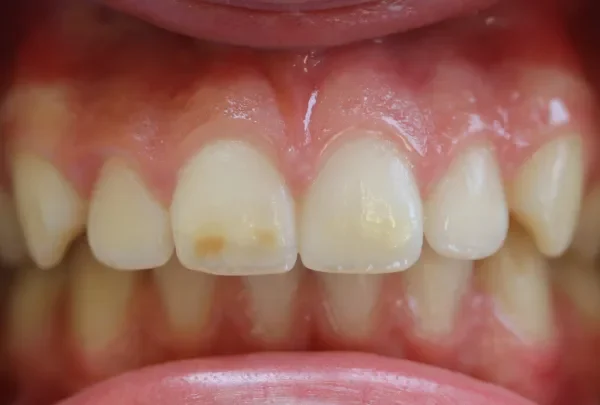
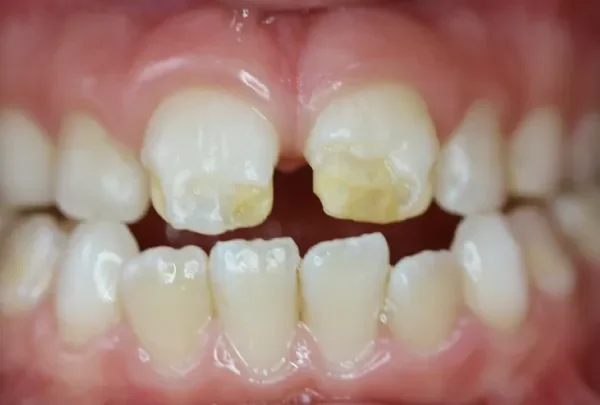
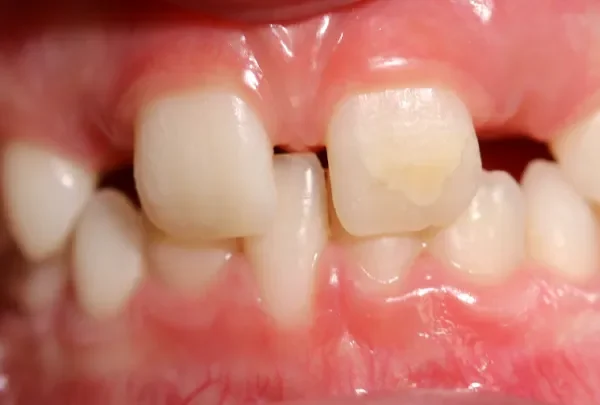
On closer inspection, small white or yellow-brown spots can be seen on the affected teeth, both on the chewing surfaces and on the sides. Grooves are often also present. As chalky teeth become increasingly porous with the progression of the condition, chipping or even the loss of the entire chewing surface can occur.
What Can Be Done About Chalky Teeth?
Since the cause of chalky teeth is still largely unclear, the condition cannot be cured, only treated symptomatically. Once the diagnosis of MIH or chalky teeth is confirmed, the treating pediatric dentist in our Munich practice discusses the appropriate therapy with the parents.
The foundation in any case is thorough oral hygiene, as chalky teeth are very prone to cavities. In addition, regular check-ups and preventive measures by the pediatric dentist are very important. The goal is to protect the affected teeth (e.g., from cavities) and to relieve the child’s pain.
The treatment of chalky teeth varies from child to child: In chalky teeth (MIH), there are different severity levels (I to III) of the condition, so the treatment is always individually tailored to the needs of our young patients.
For Severity Level I
If the enamel is still intact and only slightly damaged, regular dental check-ups and treatment of the affected teeth with highly concentrated fluoride preparations are recommended. If there are already small grooves on the tooth surface that provide an entry point for cavity-causing bacteria, a fissure sealant is applied. In this process, the grooves and ridges are cleaned and sealed with a light-curing resin.
For Severity Level II
If the enamel is already more or less destroyed, treatment is carried out with fillings or crowns. How and with which materials we restore the affected teeth is always discussed individually. Often, treating the soft, porous enamel is challenging, as local anesthesia is only partially effective on MIH teeth. Whether sedation with nitrous oxide or even intubation anesthesia is appropriate for optimal treatment depends on the child’s willingness to cooperate and the severity of the condition.
For Severity Level III
If molar-incisor hypomineralization is already so severe that the described treatments are no longer effective, it may be necessary to remove the chalky tooth. The resulting gap can then be closed with the help of orthodontics.
Schedule a Consultation About Chalky Teeth
Feel free to visit our pediatric dental practice in Munich Trudering and receive individual advice on molar-incisor hypomineralization and the options for cavity prevention in chalky teeth.
What Causes Chalky Teeth?
This question is often asked by many parents with a certain sense of guilt. But it is not their fault! According to current research, there is no targeted effective prevention. Why an increasing number of children develop a structural defect of the enamel, resulting in so-called chalky teeth, has not yet been proven. The following are discussed as possible causes:
- Illnesses of the mother during pregnancy or of the child in the first 3 years of life
- Maternal smoking
- Birth complications
- Premature birth
- Environmental toxins
- Vitamin D deficiency
- Bisphenol A
- High antibiotic intake
The only certainty is that the function of the enamel-forming cells must be impaired. Thus, the period of formation can be narrowed down from the eighth month of pregnancy to the fourth year of life.
What parents should pay attention to if their child has chalky teeth:

Proper dental care
to prevent cavities

Attend regular check-ups
with the pediatric dentist

Avoid highly acidic foods such as soft drinks, fruit, and salad dressings whenever possible

Use fluoride toothpaste and, after consulting your pediatric dentist, also apply fluoride gel and CPP-ACP complex paste
Pediatric dentist Lachzahn - what our patients say: